Okt. 31 2025
Understanding Forex Trading A Complete Guide 1824020500
Forex Trading Explained: A Comprehensive Overview
Forex trading, or foreign exchange trading, involves the buying and selling of currencies in the global marketplace. This market is one of the largest and most liquid financial markets in the world, with trillions of dollars traded daily. forex trading explained FX Trading UZ serves as an excellent resource for those looking to delve deeper into the intricacies of forex trading. In this article, we will break down the key concepts, strategies, and tools necessary for successful trading in the forex market.
What is Forex Trading?
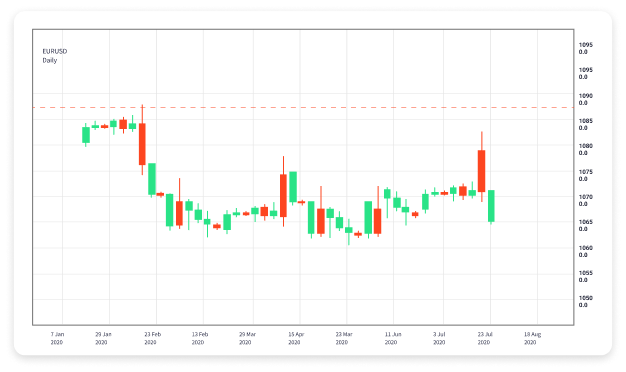
Forex trading refers to the process of exchanging one currency for another, typically aiming to profit from fluctuations in exchange rates. Currency pairs are the basis of forex trading, with major pairs including EUR/USD, GBP/USD, and USD/JPY. Each pair consists of a base currency and a quote currency, with the exchange rate indicating how much of the quote currency is needed to purchase one unit of the base currency.
The Structure of the Forex Market
The forex market operates 24 hours a day, five days a week, and is accessible worldwide. It is decentralized, meaning that trading occurs over-the-counter (OTC) rather than on a centralized exchange. Major players in the forex market include central banks, financial institutions, corporate businesses, hedge funds, and retail forex traders.
Major Participants
- Central Banks: These institutions influence monetary policy and, consequently, currency value.
- Commercial Banks: Banks facilitate currency exchanges for clients and engage in forex trading to manage their own currency exposure.
- Corporations: Businesses engaged in international trade often use forex to hedge against currency risks.
- Speculators: Retail traders and hedge funds that trade currencies with the aim of making profits from price movements.
How Forex Trading Works
Forex trading involves speculating on the price movement of currency pairs. Traders analyze various factors, including economic indicators, political events, and market sentiment, to predict currency movements. Traders can take long (buy) or short (sell) positions, depending on their expectations of future price changes.
Types of Orders
- Market Order: An order to buy or sell a currency pair at the current market price.
- Limit Order: An order to buy or sell at a specific price or better.
- Stop-Loss Order: An order to close a position at a predetermined price to limit potential losses.
Key Concepts in Forex Trading
Understanding key concepts is crucial for anyone looking to trade forex effectively:
Leverage
Leverage allows traders to control larger positions with a relatively small amount of capital. For example, a 100:1 leverage ratio means that a trader can control $100,000 with just $1,000. While leverage can amplify profits, it also increases the risk of losses.
Margin
Margin is the amount of money required to open and maintain a leveraged position. Forex brokers have different margin requirements, and it is essential for traders to understand these before entering trades.
Pips
A pip (percentage in points) is the smallest price movement in a currency pair. Most pairs are quoted to four decimal places, meaning that a movement from 1.1234 to 1.1235 represents a one-pip movement.
Trading Strategies
Building a successful trading strategy is essential for consistent profitability. Here are some popular approaches:
Scalping
This strategy involves making numerous trades throughout the day, aiming to profit from small price changes. Scalpers typically hold positions for only a few seconds to a few minutes.
Day Trading
Day traders buy and sell currencies within the same trading day, closing all positions before the market closes to avoid overnight risks.
Swing Trading
Swing traders hold positions for several days to weeks, attempting to profit from expected price changes based on technical and fundamental analysis.
Tools for Forex Trading
To effectively trade forex, traders utilize various tools and platforms:
Trading Platforms
Forex brokers provide trading platforms (like MetaTrader 4 or 5) that allow traders to analyze markets, execute trades, and manage accounts.
Technical Analysis Tools
Technical analysis involves using charts and indicators to predict future price movements. Common tools include moving averages, RSI (Relative Strength Index), and MACD (Moving Average Convergence Divergence).
Fundamental Analysis
Fundamental analysis requires understanding economic indicators, geopolitical events, and news that can impact currency values. Key indicators include GDP, employment rates, and inflation figures.
Risk Management in Forex Trading
Proper risk management is vital for longevity in forex trading. Here are some strategies:
Diversification
Avoid putting all capital into a single trade. Diversifying across different currency pairs can minimize risks.
Position Sizing
Determining how much of your account to risk on a single trade is essential. Many traders follow the rule of risking no more than 1-2% of their trading capital on a single position.
Using Stop-Loss Orders
Implementing stop-loss orders can help limit potential losses and protect your capital.
The Emotional Side of Trading
Trading is as much about psychology as it is about strategy. Developing a trading plan and sticking to it, regardless of emotions, is crucial for success. Traders often face emotions like fear and greed, which can lead to impulsive decisions.
Conclusion
Forex trading can be a rewarding venture for those willing to invest the time and effort to learn and develop their skills. By understanding the market mechanics, utilizing effective trading strategies, and practicing sound risk management, traders can navigate the forex world successfully. Whether you are a newbie or an experienced trader, the forex market offers opportunities that can lead to financial growth and freedom.
Kommentare deaktiviert für Understanding Forex Trading A Complete Guide 1824020500